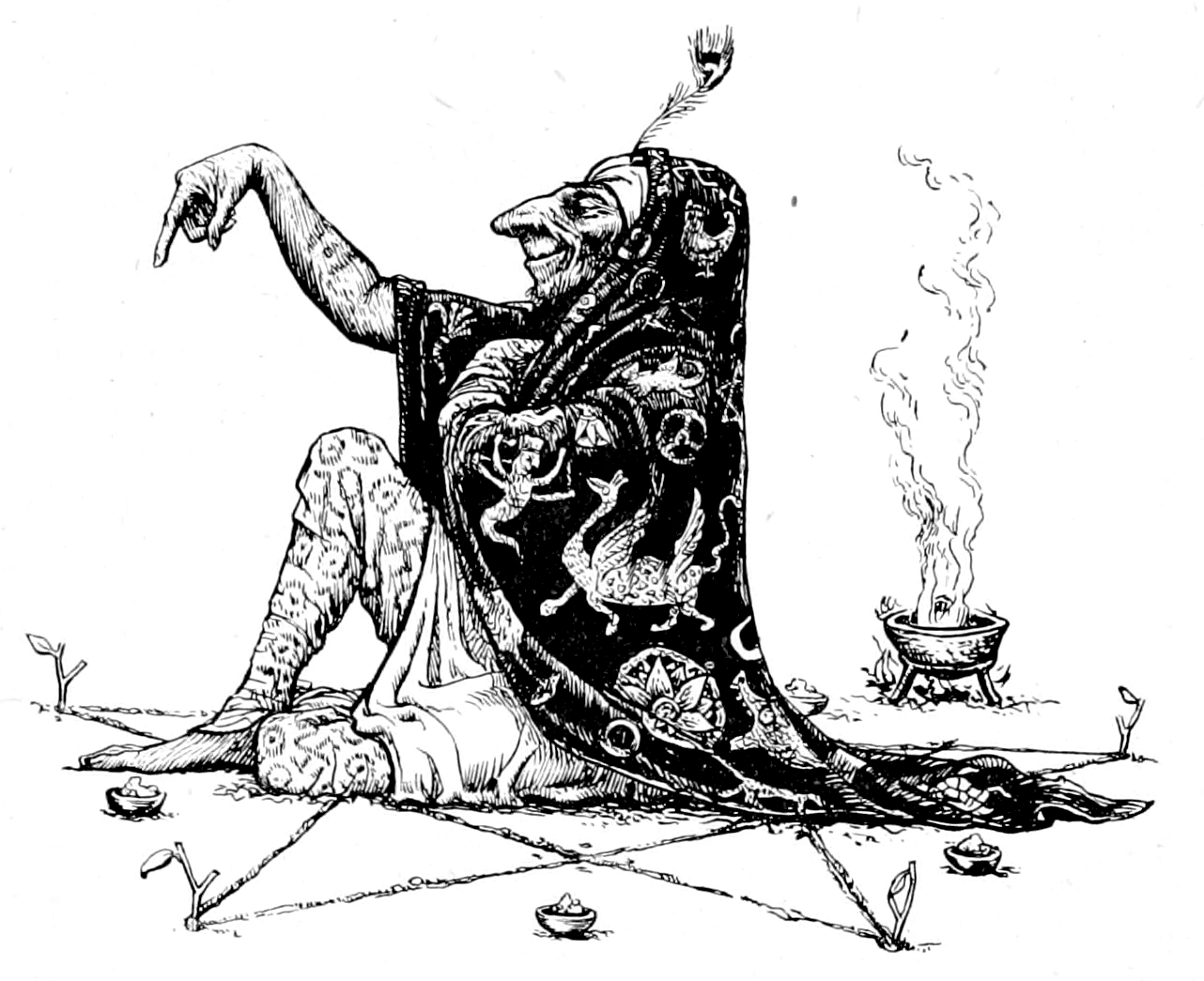
 The art of pactmaking has come far since the early days when lizardfolk shamans bumbled through dealings with beings of dust and wind, of vine and feather, and of chalk and salt. Warlocks in training learn with horror of ad hoc agreements, enforced sporadically and interpretted by ‘custom’. Parties exchanged what warlock lecturers now call the ‘three is’: intangibles, like the loss of innocence; impossibilities, like a virgin’s firstborn; and eyes (along with other body parts).
Such shoddy packmaking does still occur today, but only by the untrained, for workings of great significance, or in times of great need. The majority of dealings with dark powers today use standardised currencies and boons traded on the open market. One example of these ritual currencies is the bone shards chewed by Tiamat (03.13).
But of course these currencies must be backed by real exchanges, and the Goblin Market is the busiest and most diverse market for these exchanges in the North – at least for those who know not how to find the Unseelie.
Stalls – most but not all of them run by goblins – pop up somewhere in the North every new moon. Where the market is changes with the months, but the market comes to a series of glades in the Kingswood (33.04) at least once a year. And it is here that those who truck with spirits exchange intangibles, impossibilities and organs (their own or those of others) for bone shards, orichalcum coins, dinosaur feathers, pixie dust and other ritual currencies. See Goblin Markets for more.
Hooks:
- Where do warlocks lecture about pactmaking? Is it really as safe as they say?
- Who, if anyone, was responsible for the standardisation of pactmaking?