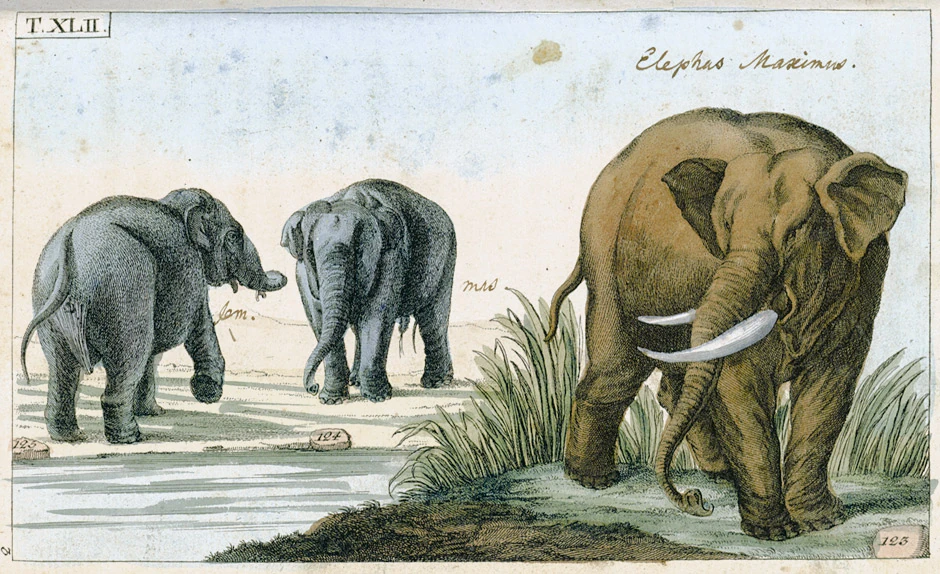
 The gnolls of the Burning Lands insist vehemently that the tusks on Sosaria’s Elephant Wall were robbed from the Graveyard of Painted Elephants (43.27.01). This is not true. The djinn servants who built the great wall harvested the tusks from the moon elephants that roamed the nearby plain. The construction of the wall drove the species to near-extinction. A few remnant bands of the elephants use a watering hole (50.20) as a base for their nightly foraging. They are one of the few beasts that the gnolls refuse to hunt because they believe that eating their flesh causes madness, and that their tusks are haunted by spirits.
Moon elephants were revered in ancient times as living calenders. Their hues and temperaments change to match the phases of the moon. During full moons, the elephants are white and radiant and bold to the point of reckless aggression. New moons dull their hides and temperaments, making them nearly undetectable at night. Travelers have slept here new moons and awoke to discover elephant footprints around their campsites.
Those who have butchered these rare, majestic creatures report that their hides do not change hue after being removed. Armor made from white moon elephant hides inspires its wearers with courage and can be enchanted to have light-related properties. The dark hide armor is sought by many thieves and assassins because it makes its wearers both more alert and difficult to see.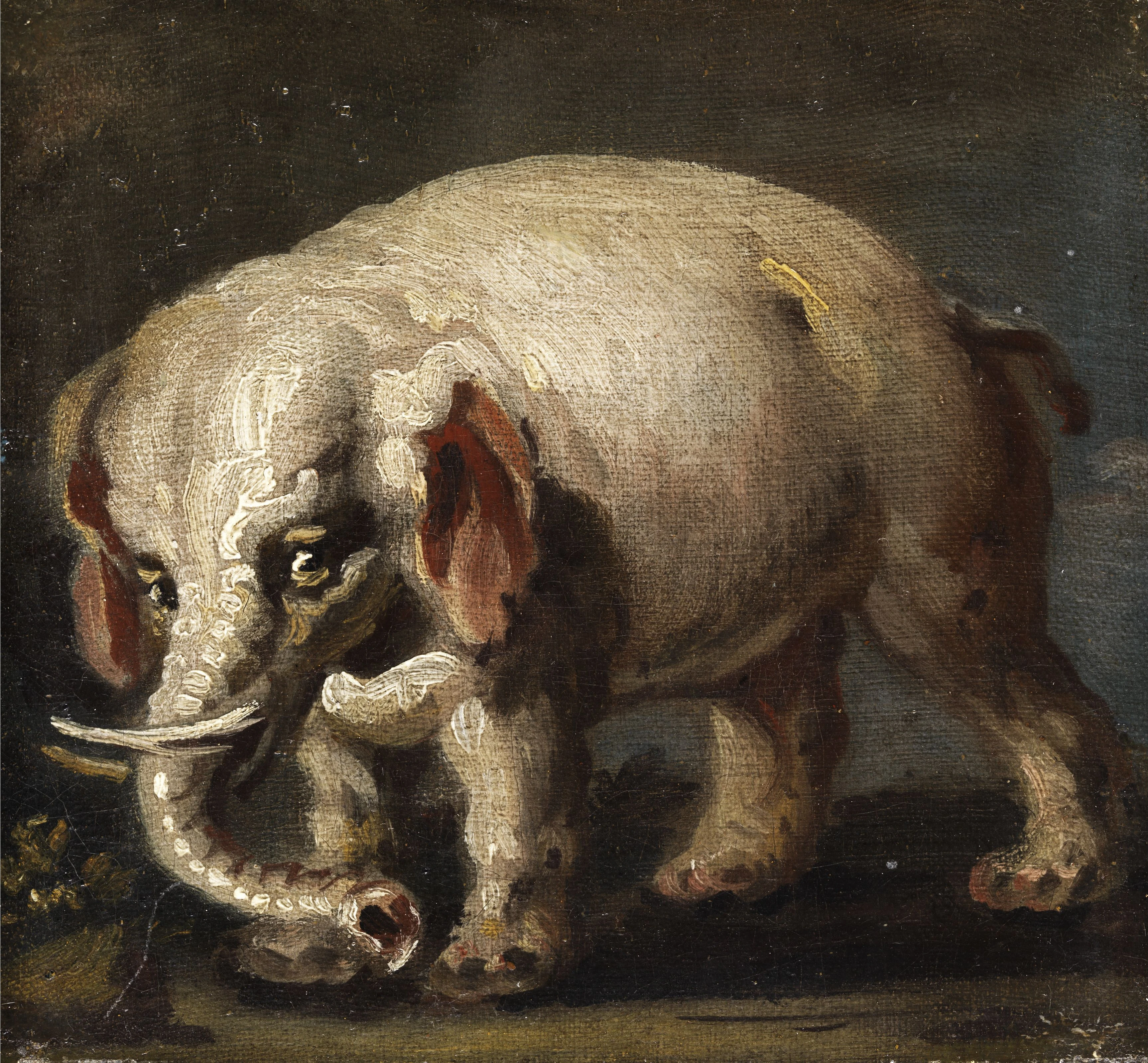
Connections:
- Octoid agents have gotten their hands on some moon elephant cloaks and are using them to infiltrate Jahur.
- The Sparrow Knight fights in moon elephant leather (16.16.10).
- Other elephant breeds exist
Hooks
- Did these remarkable elephants come from the moon? If not, what is their relationship to the moon?
- Do djinn only appear in the Shrouded Lands to serve great wizards, or do some have other business here?
- Does eating their flesh really cause madness? Are their tusks haunted?
- What other beasts dwell on the plains near Sosaria?