Connects to: 02.05, 05.06, 14.02, 17.03, 20.03, 21.02, 22.03, 24.02, 26.01.01, 26.02, 33.00 and 34.05.
Hoth Achaar is the fourth of the five great dwarven fortresses. The orcs built and now hold what they call Hoth Achaar and the dwarves call ‘First to be Returned.’
Hoth Achaar was built with the artifice of orc and dwarfkind, and it has been carefully maintained by the orcs during their occupation. Its walls are guarded by catapults and scorpions, and each of its six gates can open only when more people are inside the walls than outside it. This requirement has forced the majority of orcs to live in cramped villae in the center of the fort, while the rich and powerful live in the seventh, outermost, least defended section.
Orc quartermasters must perform careful calculations when allocating the fort’s inhabitants to certain tasks. Fortunately – and most remarkably – the orc religion requires certain sections of the population to move to different temples around the city and these movements always seem to suit the plans of the Quartermasters (26.01.01).
Subhexes:
- 26.01.01 (To the Pain): orcish gladiators do not generally fight to the death as that would be too pleasant.
- 26.01.02 (The Pact of the Eye): under the pact dwarves lived under orcish rule for quite some time.
Connections:
- The nearby petrified stumps (24.02) are a reminder of the victory of the allied dwarves and orcs against the goblins.
- The bountiful potato fields (26.02) that ring Hoth Achaar keep the orcs fed and provide potatoes for their tasty pies.
- The original ogres were conceived here.
Hooks:
- Why did the orcs and dwarves build Hoth Achaar together?
- What were the dwarven reformations?
To The Pain
 Hex 26.01.01
Connects to: 21.02, 26.01 and 42.02.
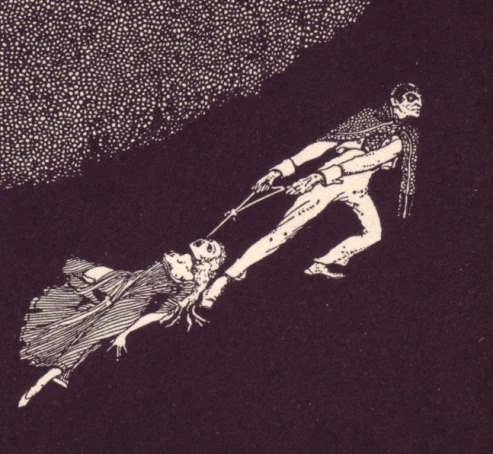
One of the most famous features of Hoth Achaar is the fighting pits where orcish gladiators fight not to the death but to the pain. In these bouts the aim is to inflict enough suffering to make the other gladiator give way. It is seen as unlucky for one of the gladiators to die, although death by blood loss of one or even both of the combatants is not uncommon. These fights are long drawn out of affairs in which the gladiators are given impractical weapons such as double-bladed swords and spiked chains to ensure that the fights do not end too swiftly. The losers in these bouts are often left maimed, but unlike other orcish cripples they are not killed but rather left to beg in the streets and elicit the screams of children.
Orcs of noble blood do not allow themselves to be seen scrabbling in the arena but rather give the gift of pain in one of the great temples of the fortress city. There they are ritually tortured until they give the signal for the pain to end. Although mistakes do happen, the priests try their best to avoid inflicting permanent damage except to remove one eye of their most stoic victims, but those orcs who endure the hooked knives of the priests are often left with an impressive set of scars to boast of.
All of these sacrifices, both in the arena and the temple, are entirely voluntary. In fact the priests demand that only free orcs who give the gift of pain of their own free will may be chosen and a sacrifice may give the signal of surrender at any time and halt the pain. However, many young orcs are quietly encouraged to participate by their elders and they know it would be unwise to not put on a good show for the great audiences that gather in the pits and the temples.
What is the purpose of all of this? Well, the orcs believe that the lords of the underworld (21.02), Gruumsch chief among them, have decreed that the orc race must know pain and misfortune so that they may learn to endure and grow strong. While all orcs agree with the wisdom of this it can be most inconvenient at times. It is all well and good for a baker to learn from the pain of fire by having his skin burned off, but why must other orcs put up with singed baked goods? Is it not far better that if the baker is fated to suffer he do it in the arena without risking his pies?
The orcs hope that the pain that they give in the pits and the temples pleases the lords of the underworld so that the orcs can enjoy the blessings and good fortune that the lords of the sky (26.01) have promised all orcs. But the orc Quartermasters are a careful lot and in the temples these economically-minded priests consult the sounds of the earth and the movements of the stars so that they can maximize the blessings given from above and minimize the misfortunes given from below. One of the ways that the Quartermasters do this is order various sections of the population to work on different tasks and to move about the city to different temples. So far this has worked well, for example when the wererat plague broke out in the city it appeared among the warg handlers and was quickly dealt with and the granaries were spared. But if seems that the Quartermasters order many things for their own benefit, for instance the rain of gold fell solely on the quarters that had recently been reassigned to the Quartermasters themselves.
All of this is especially important due to the presence of Gruumsch’s Eye within the city. This is a cave that lies within the inner part of the city, quite high up and overlooking the small river that flows easterly past the southern walls of Hoth Achaar. The Quartermasters say that from the mountain cave flows both the power of the sky and that of the underworld, while foreign sorcerers claim that this cave is the source of a powerful ley line of earth. In any case, great mystical power flows from Gruumsch’s Eye and it is trapped within the city by a thousand thousand orcish charms that have been scrawled across the outer walls of Hoth Achaar.
Connection:
- The tradition of the the pain offerings dates back to the Nameless (42.02).
Hooks:
- What are the effects of having the power of Gruumsch’s Eye contained within the city rather than be able to flow away as a ley line? That’s a lot of magical power.
- Is Gruumsch’s Eye just the source of an earth ley line or is it something else?
- Wererat plague? Rain of gold? What?
- The lords of the sky and the lords of the underworld seem to be all female and all male, respectively (21.02). Aside from Gruumsch being the most powerful of the lords of the underworld what is there to know about the lords?
- Who are some famous orcish gladiators?
- Who is an orc who is stoical enough to withstand hours of torture and have their eye surgically removed?
The Pact of the Eye
Hex 26.01.02
Connects to: 26.01.01, 34.00, 42.02 and 44.17.
The dwarves chose Hoth Achaar’s location for many reasons. The most secretive was the opportunity to study and perhaps exploit the ley line that surfaces in the mountain cave (26.01.01). The research was kept quiet. Even in their zenith, dwarves distrusted magic, and memories of the catastrophes that befell Othonoi (44.17) were still fresh.
Ram Roskinder, the Shrouded Land’s most infamous dwarf demiurge, headed the ley line project. It was here that he created his controversial Holy Mountain Thesis. It states that lines emerge at locations deemed holy by the gods. Whoever claimed these sites, physically and spiritually, would be blessed with great elemental knowledge.
Roskinder’s thesis was Hoth Achaar’s undoing. He began correspondence with a wizened orc who claimed to be the last surviving priest-king of Othonoi. Roskander eventually allowed the orc’s disciples into the stronghold to aid research and implement his ideas. The Disciples of Othonoi moved about the city with invisibility cloaks and began whispering spells into the ears of the sleeping masons and architects. Soon engravers feverishly covered the walls in runes by moonlight. They viciously assaulted any who attempted to restrain them. Paranoia, then chaos spread in the streets as citizens sought a source for the madness. It didn’t last long. After the final rune was carved into the walls, a mighty earthquake rocked the city. Its gates were torn open. An orc army marched in and occupied the city within hours while the orc construction crews and slaves within did even more damage (42.02).
The dwarves were astonished that their conquerors showed mercy. The tribe allowed them to continue their lives in exchange for tribute and passage through the city. The orcs formed a secret society called the Quartermasters. It was based around the study and reverence of captured ley line, which they renamed the Eye of Grummsch. Over the next century, the races co-existed under the so-caled Pact of the Eye. Sometimes they even formed alliances against common threats. After a bloody dwarf rebellion, however, the Quartermasters seized power and drove the surviving dwarves out of the walls.
Connection:
- Many of the dwarves that lived among the orcs while the Pact of the Eye was still in effect were the court of the last dwarven King of the Mountains (34.00).
Hooks:
- Was the ancient orc really a former priest-king of Othonoi? Who was he, and what did he gain from the Pact of the Eye?
- Where do the descendants of the rebellious dwarves dwell?
- Roskinder’s theory is controversial even after 1,000 years. What do other schools of thought believe about the lines?
- What became of the Disciples, and more importantly, their amazing invisibility cloaks?


