Connects to: 05.06, 11.03, 16.16.4, 16.16.05 and 27.19.
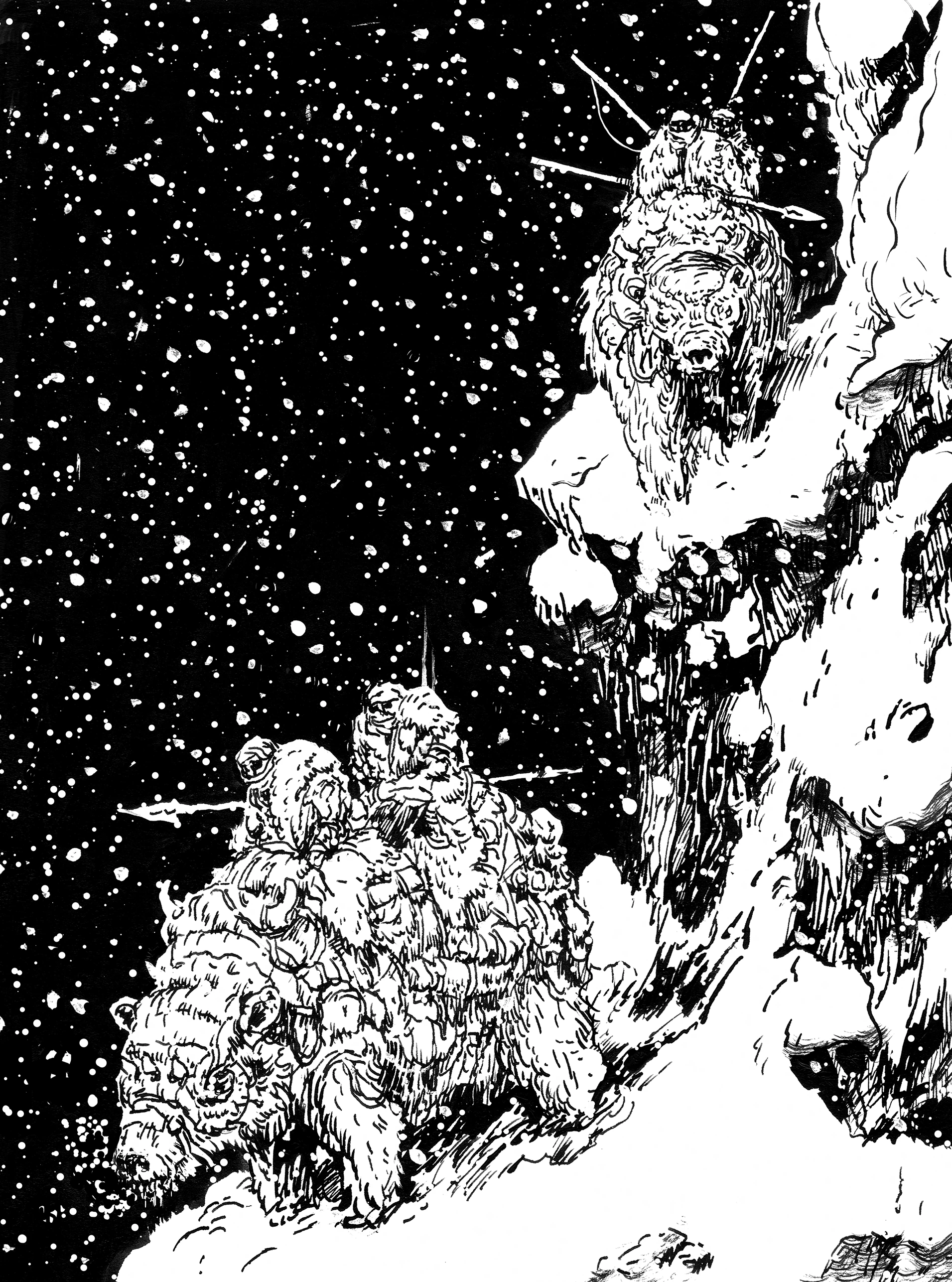
Many visitors are surprised that the “castle” is little more than a wooden palisade, though as an outpost of Thring in defiance of the Sanguine Lords Castle Karandur is engaged in almost constant low-level warfare.
Despite this, Castle Karandur has never fallen for behind its simple above-ground defenses lies a dense network of caves, some recently excavated and others based on far older construction. These caves hold storehouses, halls, chapels, paths towards alternate exits and many, many bears.
- What is the “far older construction” in the cave system?
- What interesting rooms can be found within the cave system?
The Court at Karandur
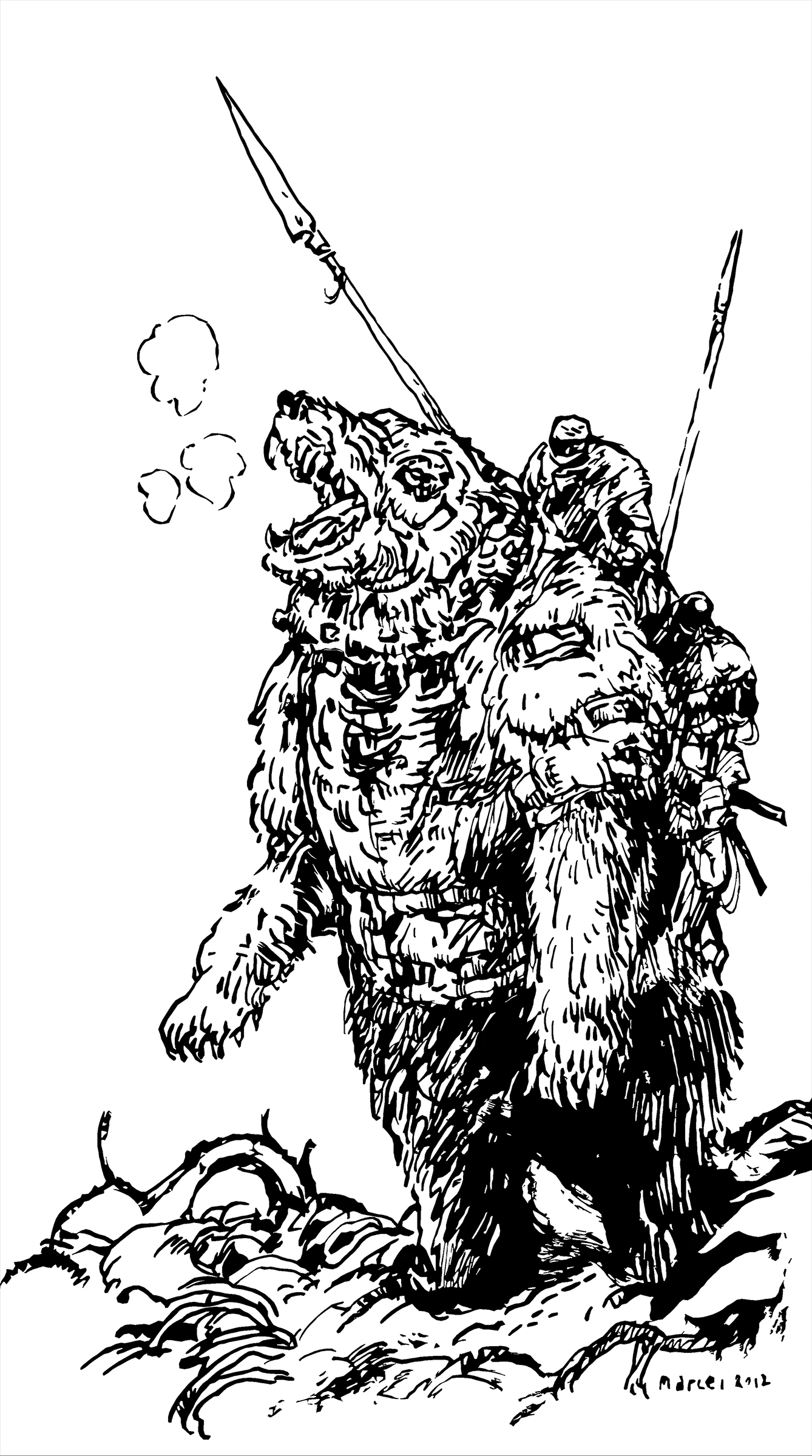 Mounts: **The knights of Karandur ride bears.
As a western outpost of **Thring that defies the Lords Sanguine of Gore, Castle Karandur is engaged in almost-constant low level warfare with its neighbors. Despite being little more than a wooden palisade, Castle Karandur has never fallen because of its network of tunnels and its bears.
Mounts: **The knights of Karandur ride bears.
As a western outpost of **Thring that defies the Lords Sanguine of Gore, Castle Karandur is engaged in almost-constant low level warfare with its neighbors. Despite being little more than a wooden palisade, Castle Karandur has never fallen because of its network of tunnels and its bears.
Unlike the knights of the rest of Thring who pine for horseflesh (16.16.04), the warriors of Karandur want nothing better than a good strong riding bear. These beasts do not enjoy much popularity elsewhere because they are difficult to tame, have ravenous appetites, sleep much of the winter and do not have the endurance needed for long campaigns. In the face of these arguments, the men and women of Karandur confidently reply that they ride bears.
In fact, it is said that the line of the Lady of Karandur can be traced back to a bear. According to legend, there were once three bear sisters who looked upon a Thringish knight, were smitten with his beauty and sought to marry him. They called out to The Pacharia to be turned into human women and were told that do to so they must stay in their cave and eat nothing but wormroot (11.03) each day for a year and a day. The eldest sister ate and ate the bitter root, but soon grew tired of it and went outside to hunt and found a succulent young fawn to eat. The second sister ate and ate but as winter approached she slept away the days. But the youngest sister kept awake all winter long by planting her paws in the waters of a cold spring and was kept alive by the warmth of the wormroot that she ate that warmed the very heart within her and made her long for the sweet face of her knight.
When spring came, the thick coat of the youngest bear sister fell away and she emerged from it a beautiful lady. She chose Yelga as her human name, married her knight and founded what has become Castle Karandur in the very cave where she spent her miserable sleepless winter.
Today the people of Castle Karandur still remember her, or at least her legend, and there is a great bear skin displayed above the hearth of their greatest hall that they say was the first skin of Lady Yelga herself.
Compared with the inhabitants of the rest of Thring, these people are quite clannish, with the Lord of the castle often being a distant cousin of his Lady. The people of Karandur rely strongly on each other in the face of the dangers that the Lords Sanguine pose and there is less of a division between the men who marry nobly and the men who marry commonly, while many of the women of Karandur wear mail more often than skirts.
Connection
- Lord Karandur’s drinking cup might be made out of half of the legendary Drinker’s Stein (05.06.01).
- According to legend, the fifth duke of Thring was a bear all covered with hair.
Hooks
- Who was the knight that the three bear sisters loved?
- What else is known about the Pacharia? (note: this legend takes place before Ulthar founded the Duchy of Thring when it was still ruled by a series of petty kings see 27.19).
- Why would staying in doors and eating strange roots turn a bear into a woman?
- Is the bear skin really Yelga’s? Does it have any magical properties?
- Who are the current Lord and Lady of Karandur?
- Any interesting bear-riding men or women that we should know about?


